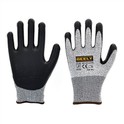
When you choose machine knitting work gloves, you’ve probably noticed that the most specifications include the glove’s gauge. The gauge of a glove indicates the number of knitting needles or stitches per square inch. For example, a 10-gauge glove has ten stitches knitted per inch of glove. The higher the number — 13-gauge, 15-gauge or 18-gauge — the more stitches that are knitted per inch. But lower gauge gloves are heavier and higher gauge gloves are lighter.
Yes, the finer is the gauge, the thicker the glove, and the greater the protection provided. The thicker the gauge, the finer the glove, achieving greater dexterity and sensitivity, but a lower level of protection. Thus, gauge 7 employs a thick thread; gauge 10, a medium thread; and gauge 13, a thin thread.
In general, higher gauges are softer with better dexterity, it’s more flexible and comfortable, and it will be easier when you do some precision operations.